Need emergency plumbing in Hubbard?
Have a leak, a blocked drain or a sewer smell? Call or send a quick request, and Publicationsdangerous Plumbing will point you to a local provider in our network.
No obligation
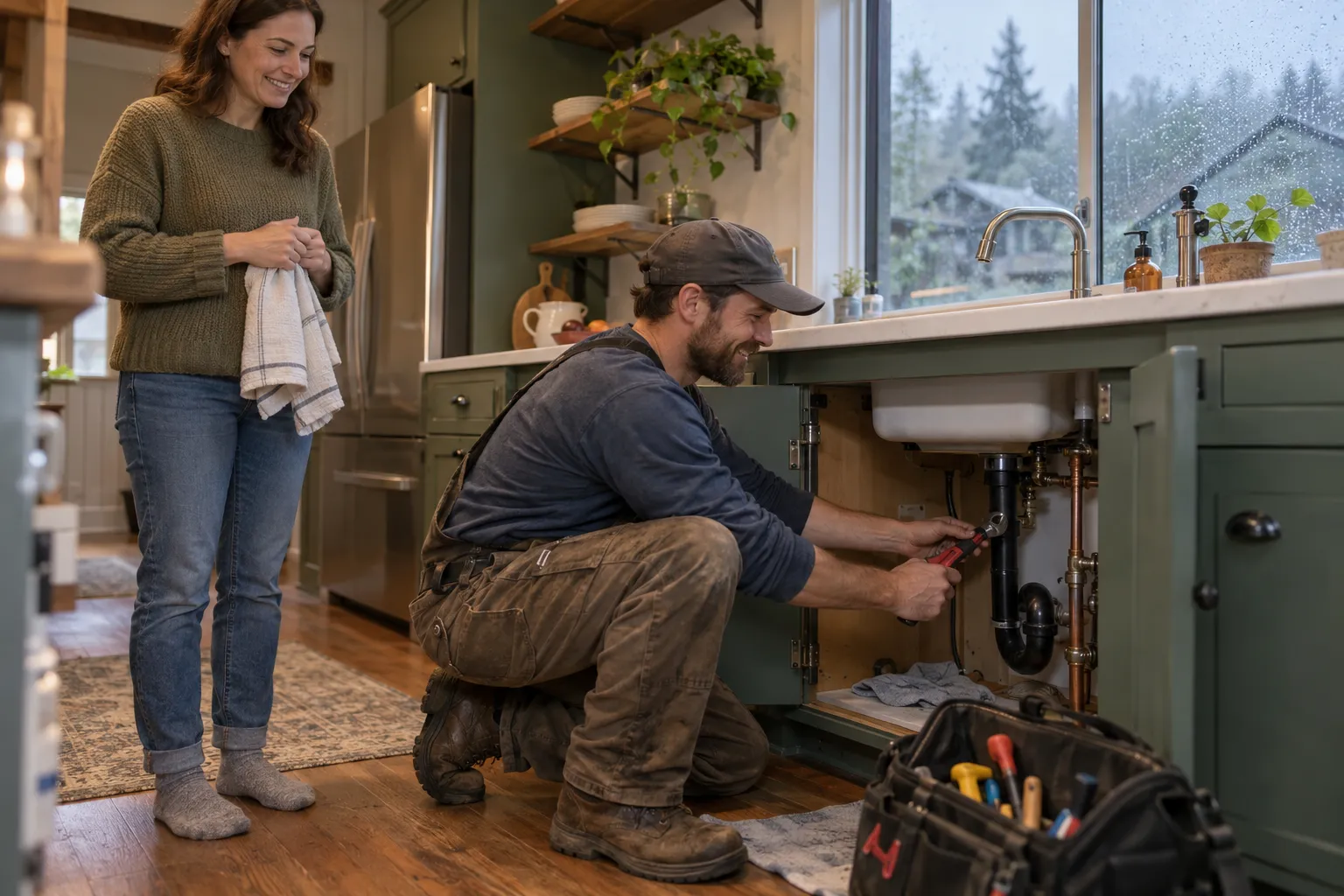
A plumbing emergency feels like chaos, but the first few steps are simple. Shut off the water, keep clear of electrical items, and take a few photos. After that, the real fix needs a licensed provider with the right tools.
Publicationsdangerous Plumbing is a referral service. We do not send workers to your door or do any plumbing ourselves. We connect homeowners across the Hubbard area with independent local providers who can handle the job. Many can respond quickly, but availability and pricing vary by provider and by the problem. Use this page to learn what counts as an emergency, what you can safely do while you wait, and which questions to ask before you hire. Always ask for a written quote before work begins.
Stay calm and work through this short list.
Then reach out for a pro.
Request a callback to check provider availability.
Myth. A lot of people think a slow drip can wait for a convenient week. In practice, a slow leak inside a wall can soak insulation and framing for days before a stain shows up. In wood-frame homes with a long rainy season, damp spreads fast and moss and mold love it.
Some problems are clear. Others are easy to underestimate. Treat these as urgent:
A dripping faucet or a slow tub drain is annoying, but usually not an emergency.
Homeowners can do more than they think, as long as it is the right stuff. You can close valves, move belongings, and soak up standing water with towels. A bucket under a drip buys time. A wet-dry vacuum helps with small spills.
You can also tighten a loose supply line by hand, or close the shutoff under a sink.
Here is the myth many people believe: a roll of pipe tape or a clamp from the hardware store is a real repair. It is only a short-term patch, and it may not hold for long. Cutting into pipe, sweating copper, or working near a gas line takes training and proper tools. A bad patch can fail while you are asleep or away.
Leave anything involving gas, electrical, sewage, or hidden pipes to a pro.
Water finds a path. It runs down studs, under flooring, and into crawl spaces where you may not look for days. Older craftsman houses with aging galvanized or copper lines can have several weak spots, so one failure can hint at others. Acting early often keeps a repair small and limits drying and rebuilding later.
Ready to talk to a provider? Request an estimate and describe what you see.
Mild weather does not make you immune. Occasional cold snaps and windstorms can hit pipes in unheated crawl spaces and outside walls. If a pipe is frozen but not split, keep a faucet slightly open and warm the area gently with a hair dryer. Never use an open flame.
If the pipe has already split, shut off the water and wait for a pro. Thawing a broken pipe can flood the space.
A puddle under the tank, rusty water, or a popping sound all need attention. You can turn off the cold water supply to the tank and set the power or gas control to off. Do not open the relief valve or remove panels. A provider can check whether it needs a repair or a replacement.
Some emergencies come from below the floor. Backed-up toilets, gurgling drains in several rooms, or sewage smells point to a main line issue. These often call for emergency drain clearing, blocked pipe services, or sewer line repair, and each has its own page on this site. A plunger is fine for one clogged toilet, but not for a whole-house backup.
Here is the plain truth. Publicationsdangerous Plumbing is a referral service, not a plumbing company. Providers do the work. When you send a request, we route you to an independent provider in our network. The provider sets the price, the schedule, and the scope of work.
If you would rather talk it through, request a callback and ask what is available near you.
Before you say yes, ask a few questions:
A good provider answers clearly and does not rush you into extras.
Once the water is back on, check the work. Look for drips, test every faucet, and keep the paperwork. Photos and the written invoice can help when you document damage for a claim. Some policies may cover sudden damage, so check your policy. Providers can often help document damage for a claim.
Then ask about prevention: insulating exposed pipes, a pressure check, or replacing an old shutoff valve.
Want a clear starting number? Request an estimate and compare.
A provider looks at the source of the problem first, shuts off water if needed, and explains what is safe to do before repairs begin.
Split, cracked, or corroded pipes are repaired or replaced using proper fittings, not temporary patches.
Leaks, pressure problems, and failed parts are inspected, then repaired or replaced based on age.
Ask for scope and price in writing before work starts, so you know what is included.
Prices vary a lot by home, pipe material, access, and time of day. These are typical U.S. ranges only. Always ask the provider for a written quote before work begins.
| Item | Typical range | Notes |
|---|---|---|
| Emergency call-out or diagnosis | $75 – $300 | Often applied to the repair; ask first |
| Burst or leaking pipe repair | $150 – $1,500 | Depends on access and pipe type |
| Frozen pipe thawing | $200 – $800 | Higher if a pipe has split |
| Shutoff or supply valve replacement | $120 – $600 | Main valves cost more than fixtures |
| Water heater repair | $150 – $700 | Thermostat, element, or valve issues |
| Water heater replacement | $1,200 – $3,500 | Tank size and fuel type matter |
Shut off the main water, switch off nearby power if safe, and take quick photos.
Request a callback or send the request form to be matched with a local provider.
Ask the provider for scope, price, and timing in writing before you agree.
Test faucets, look for drips, and keep the invoice and photos for your records.
We sort myths from facts so you know what to try and what to leave alone.
Publicationsdangerous Plumbing connects you with independent providers. Providers do the work and set their own prices.
Providers in our network know wood-frame homes, crawl spaces, and the wet climate.
Request an estimate with no obligation, then decide what is right for you.
Have a leak, a blocked drain or a sewer smell? Call or send a quick request, and Publicationsdangerous Plumbing will point you to a local provider in our network.
Shut off the main water valve, then open a low faucet to relieve pressure. Switch off power to wet areas only if it is safe to reach the panel. Take photos, then contact a local provider for the repair.
You can stop the water and limit damage, but a lasting fix needs proper tools and skill. Tape or clamps are only short-term patches. Hidden or gas-related work should go to a pro.
It varies by job, location, and timing. Call-out fees often run about $75 to $300, and repairs can climb from there. Ask for a written quote before work begins.
Have a leak, a blocked drain or a sewer smell? Call or send a quick request, and Publicationsdangerous Plumbing will point you to a local provider in our network.
No obligation