Need sewer line repair in Hubbard?
Have a leak, a blocked drain or a sewer smell? Call or send a quick request, and Publicationsdangerous Plumbing will point you to a local provider in our network.
No obligation
A sewer line is the big pipe that carries all your household waste out to the street or tank. When it clogs, cracks, or collapses, the trouble shows up fast: backups, bad smells, and soggy yard patches. Many people think it is just a tough clog. In practice, it is often a pipe problem under the ground.
Publicationsdangerous Plumbing is a referral service. Providers do the work, not us. We explain what you can safely do, what needs special tools, and then connect you with an independent local provider in our network. Many providers can respond quickly, but timing and prices vary. Request a callback to check availability, or request an estimate and describe what you see.
Myth or fact? A sewer backup is just a stubborn clog. Sometimes that is true. But when waste rises in a tub, shower, or floor drain, the main line may be blocked or broken. That is a pro job.
Do not flush. Skip showers, laundry, and the dishwasher. Every gallon you send down has nowhere to go but back into your home.
Keep kids and pets away from wet areas. Sewage carries germs, so wear boots and gloves if you must step in. Never mix cleaning products to fight the smell. The fumes can hurt you.
A lot of people think a hardware-store snake can clear a main line. In practice, the line runs underground, past bends and roots you cannot see. A cracked pipe cannot be fixed with a drain tool.
Backups are the loud sign. Quiet signs often show up first:
Fact: one slow sink is usually a local clog. Trouble at several fixtures, especially the drain closest to the ground, points to the main line.
Sewer pipes rarely fail for just one reason. Roots, age, and shifting soil work together.
When steady rain soaks the ground for months, roots chase the moisture. They slip into tiny joints and grow into thick mats inside the pipe. Wood-frame homes with big yard trees see this often.
Older craftsman houses may have clay or cast iron lines that crack or rust through. Damp, moving soil can bend a pipe and leave a low spot where waste sits. Wipes sold as flushable and grease add to the pile-up.
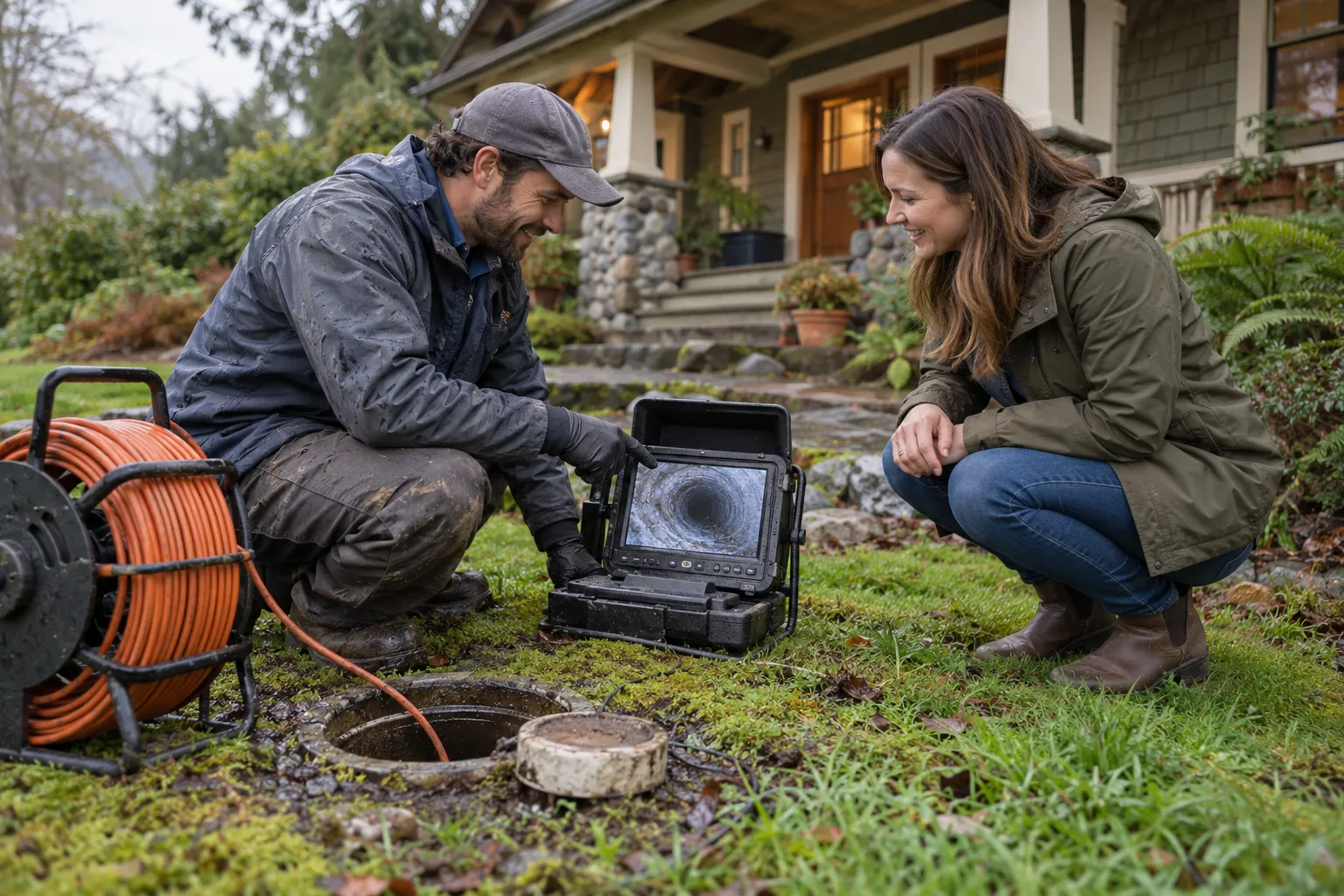
A provider usually feeds a small waterproof camera into the line through a cleanout. The video shows roots, cracks, sags, and breaks. It also helps pinpoint how deep and how far away the problem sits.
Ask to see the footage. A good provider can point to the exact spot and explain it in plain words.
Myth or fact? Every sewer repair means a wrecked yard. Fact: many repairs are trenchless. But not every pipe qualifies, so the camera view matters.
If only one section is broken, a provider may dig a small hole and replace just that piece.
Lining adds a new pipe surface inside the old one. Bursting pulls a new pipe through as the old one breaks apart. Both mean less digging.
A badly collapsed or sagging line may need open-trench replacement. It is bigger work, but it ends repeat backups.
Many areas require a permit and an inspection for sewer work. Providers often handle the paperwork, but ask who does.
Ownership matters too. A homeowner usually owns the pipe from the house to the connection point, while the city or utility owns the main. Townhomes may share a line. Rules vary, so check locally before work begins.
Some policies may cover sudden damage; check your policy. Wear and tear is often excluded. Providers can often help document damage for a claim.
Providers do the work. Publicationsdangerous Plumbing is the middleman that explains your options and connects you with an independent local provider. Each provider sets its own prices and schedule, so always get a written quote.
A small camera shows the real condition of your line, so repairs match the actual problem.
Powered tools can cut through roots and buildup that a store-bought snake cannot reach.
Lining or bursting can fix many damaged pipes with far less digging in your yard.
Collapsed or sagging sections can be replaced, with help on permits and inspections.
These are typical U.S. ranges. Your price depends on pipe depth, length, access, and local permit rules. Treat them as a rough guide, and always ask for a written quote before work starts.
| Item | Typical range | Notes |
|---|---|---|
| Camera inspection | $100 – $500 | Often needed before any repair quote |
| Main line clearing | $200 – $800 | Roots and buildup; may return if pipe is damaged |
| Cleanout installation | $500 – $2,500 | Gives future access to the line |
| Spot repair | $1,000 – $4,500 | Depends on depth and surface above |
| Trenchless lining or bursting | $3,000 – $12,000 | Less digging; pipe must qualify |
| Full line replacement | $4,000 – $20,000 | Length, depth, and restoration drive the price |
Do not flush or run water, and keep people and pets out of wet areas. Take a few photos.
Request a callback to check provider availability, or use the form to describe the problem.
An independent provider inspects the pipe and explains the cause and options.
Compare scope, permits, and cleanup before you choose to move forward.
Publicationsdangerous Plumbing is a referral service. Independent providers do all the work.
We sort myths from facts, so you know what is safe to try and what is not.
You are connected with independent providers who serve Hubbard and the Hubbard area.
Request an estimate, compare it, and decide for yourself. Prices vary by provider.
Have a leak, a blocked drain or a sewer smell? Call or send a quick request, and Publicationsdangerous Plumbing will point you to a local provider in our network.
You can stop water use, ventilate, and document damage. Digging, cutting pipe, and clearing a main line need pro tools and often a permit. A wrong move can add damage or create safety risks.
One slow fixture is usually a local clog. If several drains back up together, toilets gurgle, or sewage shows at the drain closest to the floor of your home, the main sewer line is the likely cause. A camera inspection can confirm it.
Some policies may cover sudden damage, but many exclude wear, age, and root problems. Check your policy and ask about add-on coverage. Providers can often help document damage for a claim.
Have a leak, a blocked drain or a sewer smell? Call or send a quick request, and Publicationsdangerous Plumbing will point you to a local provider in our network.
No obligation